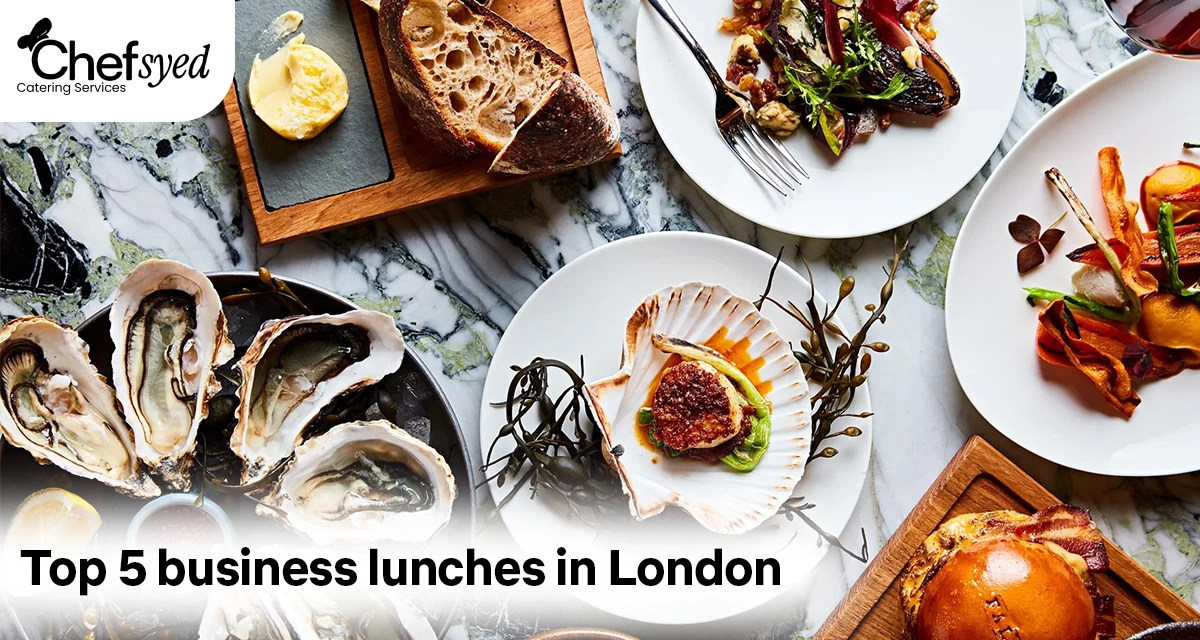
Top 5 Business Lunches Every Professional Should Know in London
In a city where deals are made over conversations rather than conference calls, lunch plays a far more strategic role than many professionals realise. London’s corporate ecosystem thrives on moments that balance productivity with connection, and the midday meal often becomes the most effective setting for that balance. Whether it’s a quiet negotiation, a client onboarding conversation, or a leadership catch-up, the right lunch environment can influence tone, trust, and outcomes. This is precisely why business lunches in London have evolved into a refined category of dining – one that prioritises efficiency without sacrificing experience.
Moreover, as work culture shifts toward hybrid models and relationship-driven growth, professionals are more intentional about where and how they meet. The modern business lunch is no longer rushed or incidental; instead, it is carefully planned, brand-aligned, and outcome-focused. From heritage restaurants in Mayfair to modern dining rooms in Canary Wharf, London offers a spectrum of lunch experiences tailored to professional needs. In this guide, we explore five standout lunch styles that consistently deliver value, credibility, and comfort – while also reflecting how services like corporate catering London are shaping expectations beyond restaurant walls.
Why Business Lunches Matter in Today’s Corporate Culture
Before diving into specific locations, it’s important to understand why lunch has become such a powerful professional tool. In high-pressure environments, lunch creates a natural pause – an opportunity to shift from transactional discussion to relational dialogue.
Several factors explain this shift:
- Shared meals foster trust and psychological safety
- Neutral dining environments reduce hierarchical pressure
- Food timing aligns with peak cognitive balance
- Informal settings encourage clearer communication
As a result, business lunches in London are increasingly viewed as extensions of workplace strategy rather than casual breaks. Organisations that understand this leverage lunch as a soft-power asset, strengthening internal alignment and external relationships alike.
1. Mayfair Classics: Where Reputation and Refinement Meet
The Gold Standard for Executive Dining
Mayfair remains the benchmark for high-level professional lunches. Its long-established dining institutions understand discretion, pacing, and presentation better than anywhere else in the city. These venues are designed for conversations that require trust, patience, and credibility.
What makes Mayfair particularly effective:
- Predictable service timelines that respect busy schedules
- Elegant interiors that signal professionalism without excess
- Menus crafted to be satisfying yet light enough for afternoon productivity
Additionally, Mayfair’s appeal lies in its consistency. When hosting senior stakeholders or international clients, predictability matters. Many executives choose these settings because they reduce uncertainty, allowing the conversation – not the venue – to take centre stage.
2. The City Power Lunch: Precision, Pace, and Purpose
Built for Decision-Makers
The City of London operates on momentum. Lunch venues here are optimised for professionals who value speed but refuse to compromise on quality. Menus are engineered for clarity, service is streamlined, and the atmosphere remains focused.
Typical characteristics include:
- Express lunch menus with minimal waiting time
- Nutritionally balanced dishes that prevent post-meal fatigue
- Seating layouts that accommodate both one-to-one meetings and small teams
As companies increasingly bring teams back on-site, many balance dining out with curated in-house options supported by office catering London, ensuring productivity continues regardless of location.
Importantly, business lunches in London within the City are less about indulgence and more about efficiency with intention – a reflection of the district’s culture.
3. Soho & Fitzrovia: Creative Energy with Professional Edge
Ideal for Agencies, Tech Teams, and Media Firms
Soho and Fitzrovia serve a different professional rhythm. These neighbourhoods attract creative thinkers who value openness, diversity, and fluid conversation. Lunches here feel less formal but remain highly effective.
Key advantages include:
- Informal yet polished dining spaces
- Menus inspired by global cuisines, reflecting diverse teams
- Environments that support brainstorming and collaboration
These areas are particularly popular for internal strategy sessions or early-stage client discussions. Companies that want to recreate this atmosphere internally often rely on a trusted London catering service to deliver the same balance of creativity and professionalism within office settings.
4. Canary Wharf: Contemporary Dining for Global Business
Designed for Modern Enterprises
Canary Wharf represents the future-facing side of London’s business culture. Restaurants here emphasise wellness, sustainability, and operational efficiency – values shared by many multinational organisations.
What professionals appreciate most:
- Clean, modern interiors that reduce cognitive clutter
- Menus focused on lean proteins and plant-forward options
- Seamless booking and billing systems for corporate clients
Many firms operating in this district align their dining standards with broader catering services uk benchmarks, ensuring consistency across meetings, events, and daily operations.
Within this context, business lunches in London at Canary Wharf feel structured, intentional, and aligned with long-term organisational values.
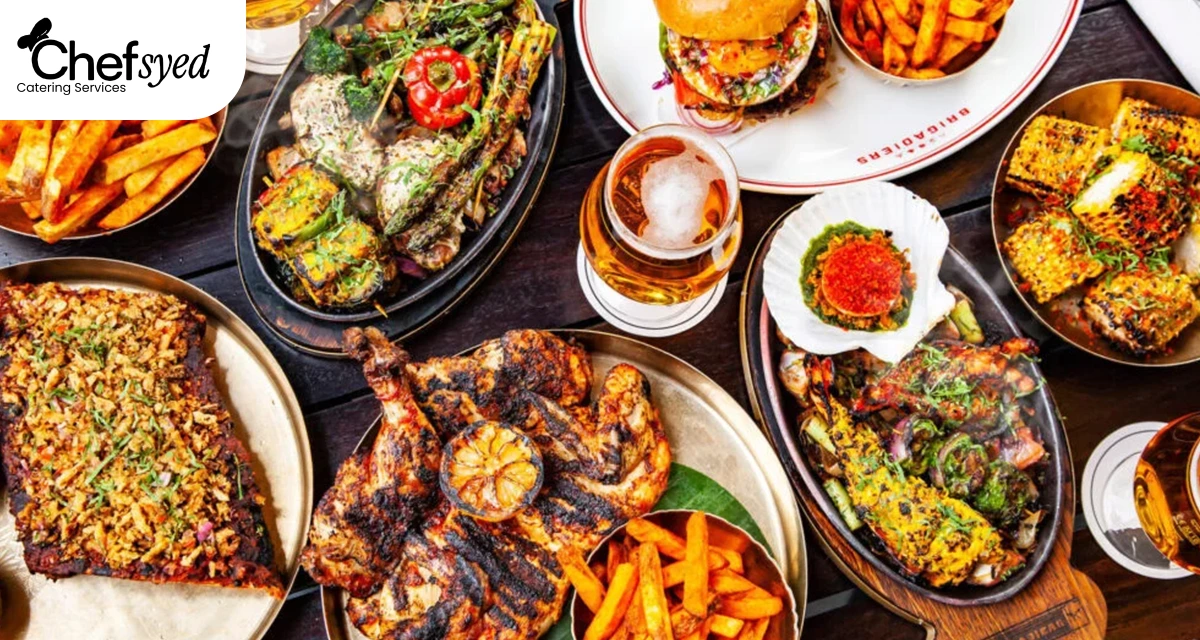
5. Contemporary Indian BBQ & Fusion Lunches
A Bold Yet Boardroom-Appropriate Choice
One of the most notable trends in professional dining is the rise of modern Indian barbecue concepts. These lunches offer depth of flavour without overwhelming formality, making them ideal for relationship-building.
Why executives are embracing this style:
- Shareable plates encourage dialogue and engagement
- Carefully moderated spice levels suit diverse preferences
- Contemporary presentation aligns with professional expectations
Premium providers such as Chef Syed Catering have played a key role in bringing this cuisine into professional environments, offering menus that feel both distinctive and appropriate. This trend highlights how business lunches in London continue to evolve alongside global tastes.
How to Choose the Right Lunch for the Right Objective
Not all business lunches serve the same purpose. Choosing wisely can significantly impact outcomes. Consider the following before deciding:
- Meeting goal: Negotiation, collaboration, or rapport-building
- Time availability: Express meeting or extended discussion
- Guest profile: Cultural background and dietary needs
- Brand alignment: Does the setting reflect your company’s image?
When these elements align, lunch becomes a strategic asset rather than a logistical necessity.
The Strategic Role of Lunch in Professional Success
As London’s work culture becomes increasingly relationship-driven, lunch continues to grow in strategic importance across industries. In an environment where trust, alignment, and clarity influence outcomes as much as data and metrics, shared meals offer a powerful yet understated advantage. Organisations that invest thought into dining, whether through carefully chosen external venues or well-planned internal arrangements, send a clear signal of respect, preparedness, and professional intent. These choices demonstrate that time, comfort, and experience are valued elements of collaboration.
This broader perspective explains why business lunches in London are no longer viewed as routine or incidental. They represent a deliberate convergence of timing, setting, and purpose. When the right environment supports the right conversation at the right moment, discussions become more productive and decisions more confident. In this way, lunch transforms from a simple meal into a strategic tool that strengthens relationships and drives better business outcomes.
Frequently Asked Questions
1. What defines a professional-friendly lunch setting?
A suitable venue supports conversation through quiet seating, efficient service, and a balanced menu.
2. Are midday meetings more effective than formal conference rooms?
Many professionals find shared meals reduce tension and encourage more open discussion.
3. How long should a work-related lunch ideally last?
Anywhere between 45 and 90 minutes, depending on the objective and participants.
4. Do menu choices impact productivity afterwards?
Yes, lighter and balanced meals help maintain focus throughout the afternoon.
5. Is hosting lunches on-site a good alternative to dining out?
It can be equally effective when privacy, time constraints, or team size are key considerations.
Conclusion: Turning Lunch into Leverage
In a city defined by pace and performance, lunch remains one of the few moments where professionals can slow down without sacrificing momentum. Amid packed calendars and constant decision-making, the midday meal creates a rare space for reflection, dialogue, and strategic connection. From Mayfair’s refined dining rooms to the modern efficiency of Canary Wharf, business lunches in London provide environments specifically suited to professional interaction – places where clarity, confidence, and credibility naturally come together.When chosen with intention, a lunch meeting becomes far more than a convenient time slot. It can shift perspectives, build trust, and strengthen partnerships in ways formal meeting rooms often cannot. The most effective professionals recognise this advantage and treat lunch not as a pause in productivity, but as an extension of it. Ultimately, business lunches in London are less about the table you sit at and more about how purposefully you use the moment to move conversations and outcomes forward.